
She Came to Paris to Dance: The American Who Became French
There is a familiar story about Americans in 1920’s Paris.
They came looking for something they could not quite find at home. Writers filled the cafés of the Left Bank. Artists gathered in Montparnasse. Books crossed the Atlantic. Jazz entered Parisian nightlife. The city became a meeting place for Americans who wanted to write, paint, experiment, escape convention, or simply experience a different way of living.
Ernest Hemingway became one of the most famous faces of that world. F. Scott Fitzgerald passed through it. Gertrude Stein built her own remarkable artistic circle. Sylvia Beach created a literary home for English-language writers on the rue de l'Odéon.
They came to Paris.
But there was another American who came to Paris during those extraordinary years and followed a very different path.
She did not simply live here. She did not merely perform here. She did not remain an American looking in from the outside. She became French.
Her name was Joséphine Baker.
The American Arrives in Paris
She was not yet 20 years old In 1925 when Joséphine Baker arrived in France. Paris was in the midst of the Années folles, the period of cultural experimentation and nightlife that followed the First World War. Jazz, dance, cinema, fashion, cabaret, and new forms of entertainment were changing the atmosphere of the city.
Baker arrived as a young American performer with an extraordinary physical presence and a style that Paris had never quite seen before. On October 2, 1925, she appeared at the Théâtre des Champs-Élysées in La Revue Nègre and the response was instantaneous.
Her performance became one of the sensations of Jazz Age Paris.
But there is an uncomfortable complexity to that success.
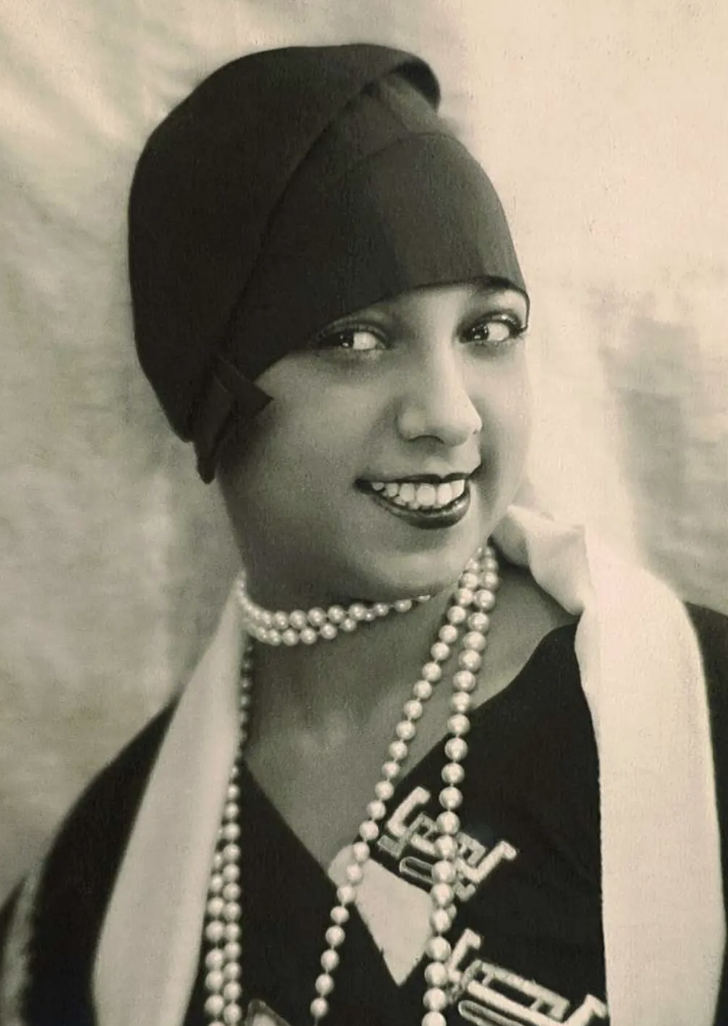
(Non-copyrighted picture of Josephine Baker 1930 from Picryl Library)
The French fascination with Baker was partly shaped by exotic stereotypes about Black Americans and colonial culture. Baker understood the expectations being placed upon her and, in her performances, she often exaggerated, distorted, and played with those expectations. The Élysée's historical account of her life describes how she used comedy and physicality to undermine some of the very stereotypes being projected onto her.
That contradiction would follow her throughout her career. Paris opened doors for her, but the doors did not open into a completely uncomplicated world.
She Didn't Just Perform in Paris
After La Revue Nègre, Baker's career in France expanded rapidly. She performed at the Folies-Bergères and the Casino de Paris. She became a singer and actress as well as a dancer. She appeared in films, including Zouzou, alongside Jean Gabin. (famous French actor)
She became one of the most recognizable performers in Europe. And something else was happening. She was learning France. The language. The culture. The rhythms of Parisian life. The audiences. The music. The theater. The public imagination.
She was no longer simply an American entertainer appearing in Paris. She was becoming part of the French cultural landscape. The French National Library continues to document the importance of her Paris performances, including her celebrated appearance at the Folies-Bergères in 1926.
And that distinction matters.
Many Americans of the Jazz Age experienced Paris as expatriates. Josephine increasingly experienced it as home.
Two Ways of Being American in Paris
This is where Joséphine Baker changes the story of the American Left Bank.
Hemingway's Paris is often remembered through his writing. Fitzgerald's through his social world. Sylvia Beach's through books and literary friendships and the American expatriate experience was, in many cases, about maintaining a relationship with America while living somewhere else.
Baker's story eventually went into a different direction. She was not simply an American who happened to live in France. She became an American-born French citizen.
In 1937, she married Jean Lion and became a French citizen. The French presidency later described her as an American who had chosen France and made that choice part of her identity and public life. And this was not merely a legal change. Her relationship with France became increasingly profound.
Later on, In a famous expression of that attachment, Baker described Paris as her country. It is difficult to imagine a more revealing contrast with the conventional expatriate story. Some Americans came to Paris to discover themselves. Baker came to Paris, and eventually made Paris part of herself.
The City Gave Her a Stage
There is irony in Baker's story. France gave her opportunities that the United States of her youth had denied her. Born in St. Louis in 1906, Baker grew up under the realities of racial segregation in America. The French presidency's account of her life recounts the poverty, discrimination, and violence she experienced before becoming a performer.
Paris offered something different. It was not equality in every sense, but rather a stage, an audience, a career, and eventually a place in French public life.
Her transformation therefore cannot be reduced to the romantic idea that Paris simply “accepted” her. Paris was complicated, France was complicated and so was she. She succeeded partly because she was able to turn the expectations placed upon her into something uniquely her own.
She took the image others wanted to see and made it part of a performance that belonged to her. That ability, to transform expectation into identity, became one of the defining characteristics of her career.
Then the Story Changed
The Jazz Age eventually gave way to a much darker Europe. The glamorous Paris of the 1920s could not survive unchanged into the 1940s. And Baker's relationship with France changed.
During the Second World War, she did something that separated her even more dramatically from the image of the glamorous American performer.
She became involved with the French Resistance.
According to the Élysée, she transmitted confidential information, helped the Resistance, supported Free French forces, and used her international travel and celebrity as part of her wartime activities. She was subsequently awarded the Médaille de la Résistance and, later, the Croix de guerre and the Légion d'honneur. That in itself is extraordinary.
The young American who had arrived in Paris as a dancer was now risking her life for France and the stage had become something else. France was no longer simply the country in which she had found artistic freedom. It had become a country she was willing to defend.
From Performer to Citizen
That is perhaps the most important distinction between Josephine Baker and the more familiar American expatriates of the 1920s. She did not remain permanently outside French society, looking at it with an American perspective. She entered it as she took French citizenship.
She participated in French public life. She served France during the war and she continued to live between France and the United States while maintaining a profound attachment to both countries.
And she never stopped being American (That is what makes her story so interesting.) Her identity was not a simple replacement of one nationality with another. She became both.
American by birth. French by choice. Parisian by attachment. And, eventually, a figure within France's national historical memory.
The American Who Became Part of France
In 2021, France gave Baker one of its most extraordinary honors.
She entered the Panthéon. The French presidency described her as “American and French” and emphasized that she had chosen France, fought for its freedom, and made the country part of her life's work.
The symbolism is rather difficult to miss. The Panthéon is where France honors figures it considers significant to the nation's history. And Joséphine Baker entered not because she had been born French but because she had come from somewhere else.
Her story therefore belongs to a much larger Parisian tradition. Paris has always attracted outsiders, artists, writers, musicians, thinkers, and revolutionaries.
People arrive speaking another language and gradually discover that the city has given them a new way of seeing the world. Some stay for a season. Some stay for a career. Some leave. And a very few become part of the history of France itself.
Joséphine Baker belongs to that last category.
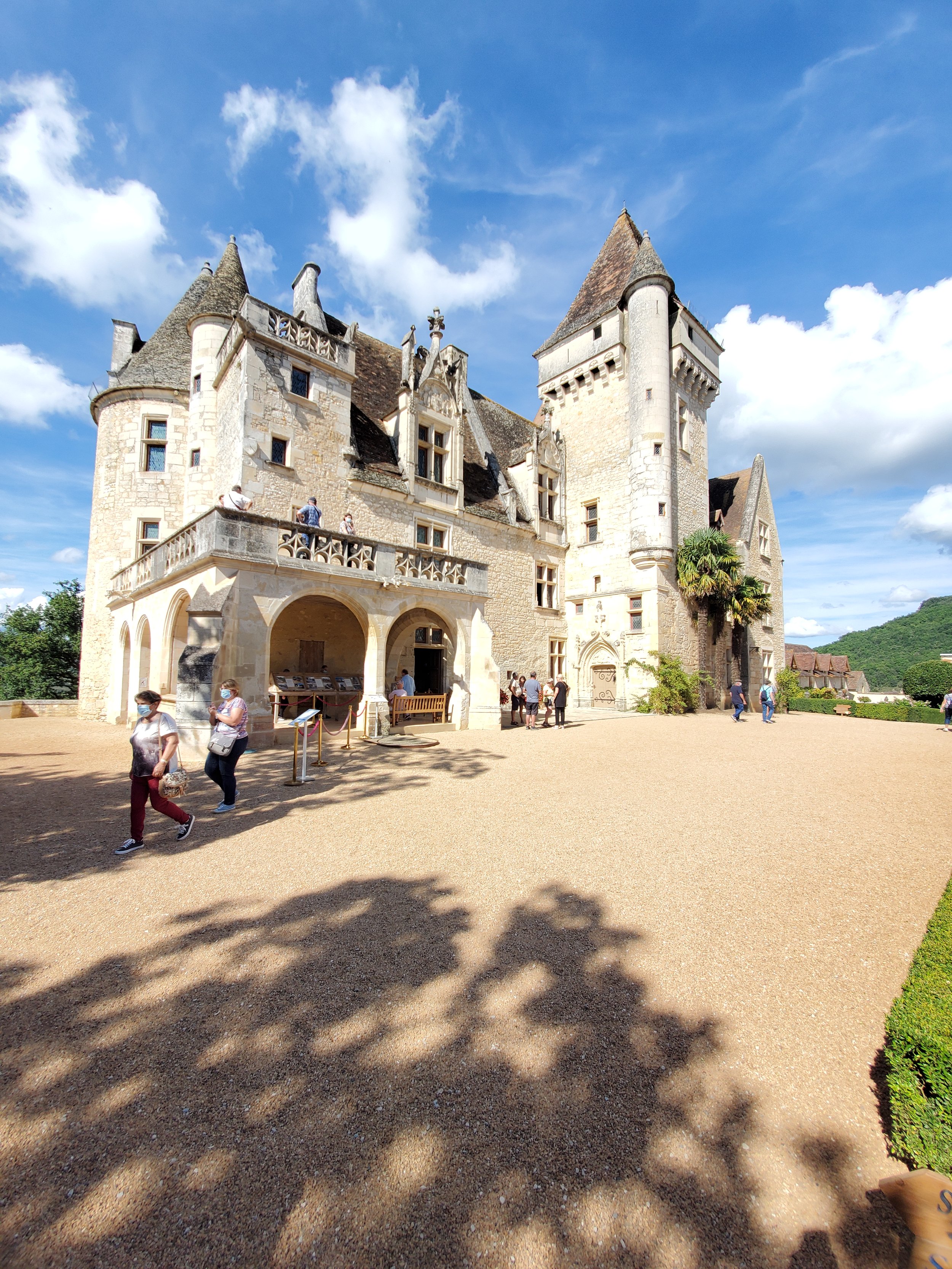
The Chateau des Milandes where she lived for 22 years. It is a majestic piece of Baker’s and France’s history, well-worth the visit. Caution, it is NOT in Paris.
Look Beyond the Famous Names
This is why the story of Americans in Jazz Age Paris should not end with Hemingway. If we only follow the famous writers, we see one version of expatriate Paris. Follow Baker instead, and another Paris emerges. A Paris of theaters and music. Of Montparnasse and the Left Bank. Of jazz and cabaret. Of American artists entering French cultural life. Of cultural exchange rather than cultural isolation.
And eventually, something far more profound than the Jazz Age itself emerges: belonging.
Baker came to Paris as a young American performer. France gave her a stage and Paris gave her a career. She gave France her talent, her courage, and ultimately her service.And somewhere along the way, the relationship changed.
She was no longer simply an American in Paris.
Walking Through Her Paris
Today, the Paris of Joséphine Baker is not contained within a single address. Rather her story crosses the city. The Théâtre des Champs-Élysées recalls the young performer who first stunned Paris. The world of the great Parisian music halls evokes the extraordinary career that followed.
Also the Left Bank and its surrounding neighborhoods recall the international cultural world of the Jazz Age, and as mentioned, the Panthéon offers a very different conclusion to the story. The question is no longer where an American artist performed. The Left Bank may be the most fascinating way to revisit the American Paris of the 1920s.
L'Autre Paris, our guiding concept at Inner Circle Paris suggests that the genuine narrative of the capital remains hidden directly beyond its stone walls, waiting for those who discover where to seek and find welcoming doors.
Josephine Baker's journey and her connection to Paris went far deeper than that of a mere spectator. Discerning visitors today, seeking refined private journeys instead of tourist crowded monuments, pursue a similar ideal: not just viewing the capital, but truly entering its heart.
Published by Inner Circle Paris